

An atmosphere of nervous excitement. Visible is the chilled vapour coming from my rivals as they do the "pre-race" wiggle on the beginning point.
A swift movement of the hips.
I'm at my local Saturday morning race and I'm focused. Three, two, one...
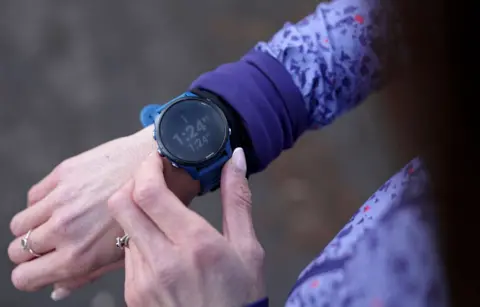
Oh, hang on. I have to adjust my watch. As does the guy beside me.
The person behind us expresses impatience. I won't start until… there! Connection established, away I go.
In the mele, it's challenging to find a person without a fitness tracker on it. And this extends beyond us athletes who use them.
This is a explosive, massive market. Names like Apple Watch are prevalent, each with an wide range of various versions to fit a range of budgets. Based on how advanced the watch you choose, costs can vary between a hundred pounds to thousands of pounds.
"It makes me crazy, I can't relax."
"It reassures me… It acts as a supporter supporting me."
"I wish it wouldn't say about a restless night."
Just some of the reactions I've received from fellow device users when I inquire what they feel about theirs.
The Monitoring Conundrum
My feelings on mine? Currently, annoying. It's telling me my speed is wrong, causing me to question whether the foliage I'm passing under are blocking my location tracking.
A vast number of us attach these compact gadgets onto our wrists and use them constantly, seemingly unconcerned with the fact they're perpetually recording us.
Gone are the days when we used them exclusively to give us an idea of our pedometer reading. Today, they can analyse our sleep patterns, stress levels, heart rate variability (HRV), our body battery.
It's tricky to find a health indicator they don't track.
But do they do what they claim to do? And are the statistics we analyse a accurate representation of reality? Do they boost our mental and physical wellbeing, or do the plethora of metrics and cheerleading alerts just contribute to our everyday anxiety?

A Complicated Bond
"I become a quite fixated with mine," a wearer admits.
While she appreciates how her device monitors her exercise, she finds some of its other capabilities "excessive" at times - a feeling first discovered during a pregnancy.
Until she found out she could put it into a specific mode, her smartwatch kept telling her she was not being energetic enough. Later on, the watch keeps telling her she's had a poor sleep score.
"I have a young baby, there's no point to be told I'm tired," she says. "I know that all too clearly."
Why doesn't she just stop wearing it?
"It's possible, perhaps, but I've got this complicated dynamic with it," she says. "I value it for its fitness insights, but I'm unsure whether the myriad other functions it can now do is possibly too much for me."
The Technology Behind the Tracking
Each model of smartwatch has its own novel way of tracking your health metrics and interpreting your data, but the most use detectors on the back of the watch.
They commonly project small, green LED lights onto your wrist which can monitor pulsation, detecting your pulse rate. Sophisticated devices detect changes in the skin conductance that passes over the skin to assess your recovery state.
A Fine Balance
A professor says that in general for smartwatches, it's a "difficult line" - while the ever-evolving tech could actually prevent illness, "spotting abnormalities before we feel unwell", it could also turn us watch wearers into the "concerned but fine".
He points out that newer wearables can conduct tests like electrocardiograms (ECGs), which constantly monitor how normal the heart is. They can flag if someone is experiencing an irregular rhythm, where there is irregular electrical activity in the heart causing an irregular heartbeat.
This does not automatically signal someone is about to have a heart attack, but it can give an advance notice they might be more susceptible of a heart problem in the years to come.
But how to make sense of these figures is complex. The expert fears that as additional features are added, people may not be able to fully comprehend their data.
"I'm not entirely convinced that being able to monitor so many things is such a positive development," he says.
A professor studying wearable tech agrees. Research into the influence of wearable tech on a set of cardiovascular patients suggested a significant portion of those who were given devices to monitor their condition experienced increased anxiety and were "more inclined to use doctor's time".
She observed a vicious circle with her patients - they saw a worrying figure on their watch. They grew concerned. Their BPM increased. They got more worried. They looked a second time, and their reading rose further.
"Upon viewing numbers about ourselves that we can't properly interpret then, understandably, we are going to become concerned," the psychologist says. "We monitor, we re-check - it becomes a self-fulfilling prophecy."


